
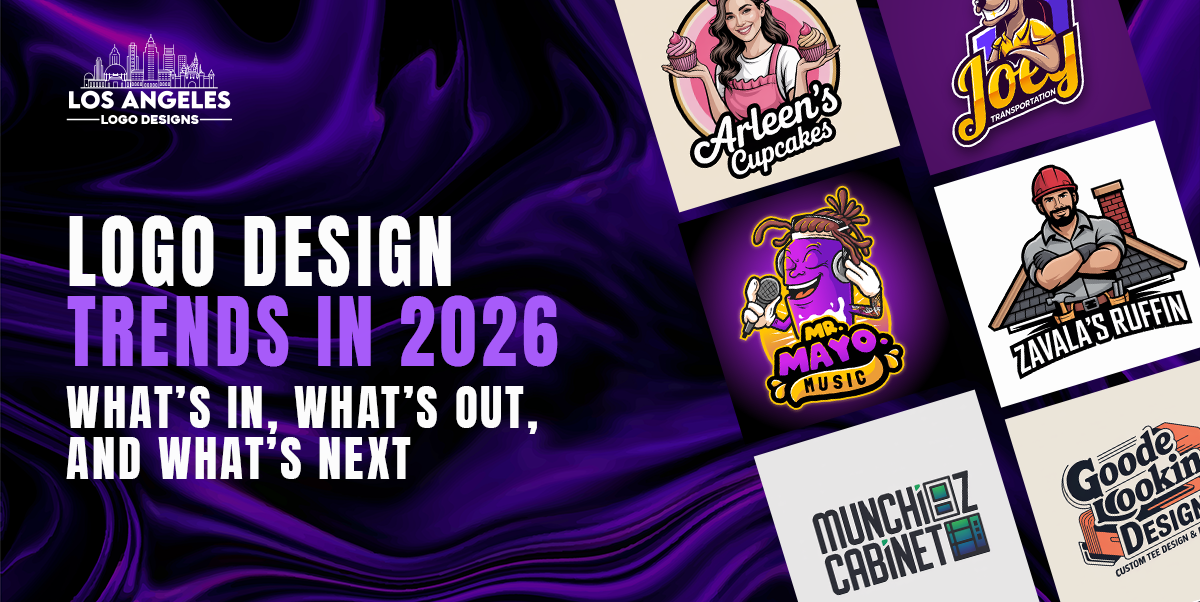
Logo Design Trends in 2026 | What’s In, What’s Out and What’s Next
As we move deeper into the future ready digital age, logo design continues to evolve beyond aesthetics. In 2026, logos are no longer just visual identifiers they are strategic brand assets built for adaptability, motion and multi-platform visibility. Businesses that understand where logo design is heading gain a powerful competitive advantage, while those clinging to outdated styles risk appearing irrelevant.
This guide explores what’s shaping logo design in 2026, which trends are fading and what forward thinking brands should prepare for next. Whether you’re a startup, a growing business or an established enterprise, understanding these shifts will help you make smarter branding decisions.
Why Logo Trends Matter More Than Ever
Credibility, personality and relevance need to be communicated in a matter of seconds when attention spans are constricted in the digital environment today. This is often on mobile displays, social feeds or application icons. It is the logo trends that greatly reflect broader evolutions within consumer behavior, technology and the philosophy of design. Neglecting these dynamics can actually affect not just visual appeal but also brand trust, recognition and engagement. The most successful brands of 2026 continue to evolve not react through an intentional process.
What’s IN: Logo Design Trends Dominating 2026
1. Adaptive & Responsive Logo Systems
Static logos designs are being replaced by flexible logo systems designed to adapt across platforms. In 2026, logos are expected to function seamlessly on websites, mobile apps, social media, smart devices and even AR environments.
Brands are adopting logo families primary marks, simplified icons, micro logos and animated versions ensuring consistency without sacrificing usability. This adaptability improves recognition while maintaining visual integrity in every context.
2. Motion First Logo Design
Animated logos are no longer optional they are becoming a standard branding element. From website loaders and video intros to social reels and digital ads, motion adds personality and emotional connection.
In 2026, logo animations are subtle, purposeful and strategically timed. The goal isn’t to impress it’s to engage. Motion is used to guide attention, reinforce brand tone and enhance memorability without overwhelming the viewer.
3. Confident Minimalism (With Personality)
A minimalism logo remains strong, but it has matured. The cold, overly generic logos of past years are giving way to confident minimalism clean designs infused with distinct character.
Brands are using unique typography, custom spacing and thoughtful proportions to stand out without clutter. The focus is on clarity, confidence and long term relevance rather than trendy shortcuts.
4. Custom Typography as a Brand Signature
Typography led logos are dominating 2026. Instead of relying on symbols alone, brands are investing in custom letterforms that become instantly recognizable.
These typographic marks feel personal, own able and difficult to replicate. Whether bold, refined, playful or authoritative, custom typography logo allows brands to communicate tone and values without relying on visual gimmicks.
5. Sophisticated Color Gradients
Gradients are no longer flashy or experimental they are refined, intentional and brand driven. In 2026, gradients are used to convey depth, emotion and modernity without overpowering the design.
Designers are favoring softer transitions, natural color flows and muted palettes that feel premium rather than loud. When executed properly, gradients logo designs enhance versatility across both digital and print environments.
6. Logos Designed for Dark Mode
With dark mode now standard across devices and platforms, logos must perform flawlessly on darker backgrounds. Brands are creating logo variations optimized for contrast, legibility and accessibility.
This shift ensures consistency across user preferences and enhances visual comfort, especially in mobile and app based experiences.
7. Purpose Driven Design
Consumers in 2026 expect brands to stand for something. Logos are increasingly reflecting values such as sustainability, inclusivity, innovation and transparency.
This doesn’t mean literal symbols or clichés it means intentional design choices that align with brand mission. Authenticity is now a visual requirement, not a marketing message.
What’s OUT: Logo Trends Losing Relevance
1. Overused Template Logos
Generic icons, stock symbols and overused design templates are quickly becoming liabilities. In a crowded market, similarity equals invisibility.
Brands relying on template based logos struggle with differentiation, trademark issues and long term credibility. In 2026, originality is not a luxury it’s a necessity.
2. Overcomplicated Designs
Logos overloaded with details, effects and multiple elements fail in modern digital environments. They don’t scale well, don’t animate cleanly and often lose clarity on small screens.
The trend is moving away from visual noise toward intentional simplicity that communicates clearly and consistently.
3. Ultra-Thin Typography
While thin fonts once felt modern and elegant, they often suffer from legibility issues especially on mobile devices and high resolution displays.
In 2026, brands are choosing balanced typography that prioritizes readability without sacrificing sophistication.
4. One Size Fits All Logos
A single logo used everywhere without adaptation is increasingly ineffective. Brands that don’t consider platform specific variations risk inconsistent presentation and reduced recognition.
Flexibility is replacing rigidity as the standard approach.
What’s NEXT: The Future of Logo Design Beyond 2026
1. AI Assisted, Human Led Design
AI tools are becoming part of the design workflow, assisting with ideation, variations and testing. However, the human element remains essential.
The future belongs to designers who use AI strategically enhancing creativity without sacrificing brand understanding, emotional intelligence or originality.
2. Interactive Logos
Logos are beginning to respond to user interaction hover effects, motion triggers and contextual changes. This interactivity enhances engagement and creates memorable brand moments.
As web experiences become more immersive, logos will play a more active role in storytelling.
3. AR and Spatial Branding
With the growth of augmented reality, logos will increasingly exist in three dimensional and spatial environments. Brands are starting to think beyond flat screens toward immersive brand experiences.
Designing logos that translate into AR spaces will become a forward thinking branding advantage.
4. Data Informed Branding Decisions
Design decisions are becoming more strategic and measurable. Brands are testing logo variations, colors and motion styles to see what resonates best with their audience.
In the future, logo design will be guided by both creativity and performance insights.
How Brands Should Prepare for Logo Design in 2026
To stay competitive, brands should approach logo design as a long term investment rather than a onetime task. This means:
- Designing logos as systems, not single marks
- Prioritizing adaptability across digital platforms
- Investing in originality and custom design
- Planning for motion, dark mode and interactivity
- Aligning visual identity with brand purpose
A logo designed with these principles will remain relevant well beyond 2026.
The Business Impact of Modern Logo Design
A forward thinking logo directly influences brand perception, trust and growth. Companies with strong, adaptable logos benefit from:
- Higher brand recognition
- Stronger emotional connection with audiences
- Improved digital performance
- Greater consistency across marketing channels
- Long term brand equity
In contrast, outdated or generic logos create friction, reduce credibility and limit scalability.
More Articles You’ll Find Useful:
Animated Logos | The Future of Digital Branding
The Rise of Gradient Logos | Why They’re Popular Again
Logo vs Brand Identity: What’s the Difference & Why It Matters
Final Thoughts: Design for the Future, Not the Moment
Logo design in 2026 is about clarity, adaptability and authenticity. Trends come and go, but brands that focus on purpose driven, flexible and well executed design will always stand out.
Rather than chasing every trend, the smartest approach is to understand why trends exist and apply them strategically. A logo should evolve with your brand, not constrain it.
If your current logo no longer reflects who you are or where you’re going 2026 is the perfect time to rethink your visual identity and design for what’s next.
